The Roundtable - Caring Culture / Okrúly stôl - Starostlivá kultúra
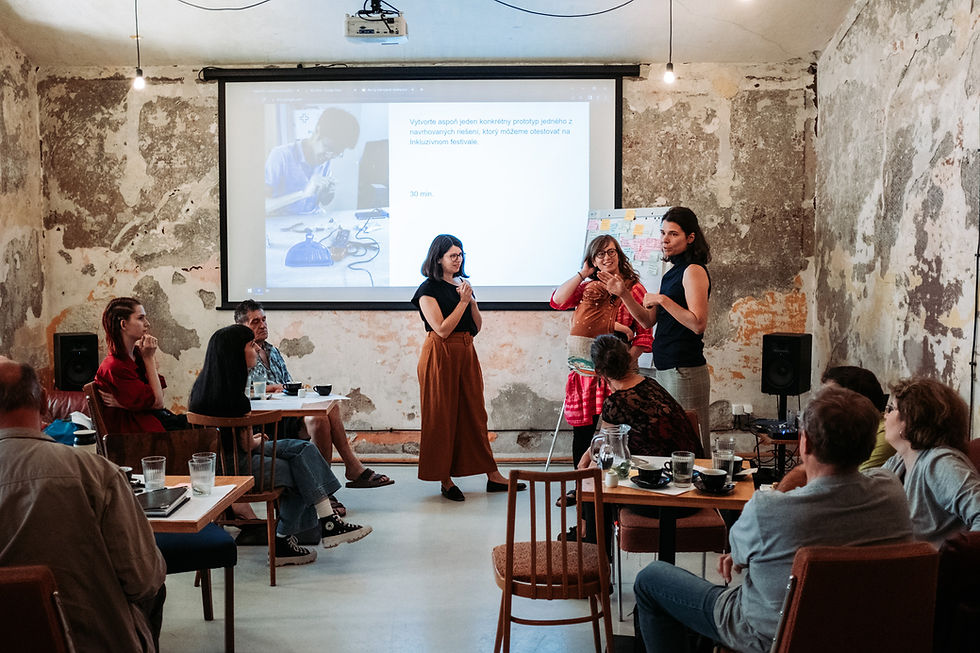
On 8 September 2025, the final event of the year-long Caring Culture project took place in Košice – the Roundtable, where participants discussed the results and brainstormed concrete actions and activities to support Košice’s cultural scene in times of uncertainty
Dňa 8. septembra 2025 vyvrcholil projekt Caring Culture v Košiciach svojím záverečným podujatím – Okrúhlym stolom, ktorý spojil účastníkov, aby spoločne diskutovali o výsledkoch a hľadali nové spôsoby, ako posilniť miestnu kultúrnu scénu v období neistoty

[For English scroll down]
„Nikto nebude ochraňovať niečo, na čom mu nezáleží;
a nebude nám záležať na niečom, čo sme nezažili.“
-David Attenborough
Výrok Davida Attenborough trefne zhrňuje to, o čom je samotný projekt Caring Culture - Starostlivá kultúra. Preniesť, zhmotniť a poskytnúť "zažitie" toho, čo pre kultúrnych aktérov znamená práca a pôsobenie v kultúre a prevádzka kultúrnych centier. Na druhú stranu sme vnímali ako veľmi dôležité, aby si zástupcovia a zástupkyne kultúrnych centier "zažili" to, akým spôsobom predstavitelia samospráv uvažujú o kultúre, kultúrnych centrách a kultúrnej politike. S akými víziami a bariérami sa stretávajú v každodennej práci a kde sa tieto dva svety môžu stretnúť.
Na stretnutí s názvom "Okrúhly stôl" sa osobne stretli takmer všetci účastníci a účastníčky projektu Starostlivá kultúra, ktorí sa zúčastnili experimentánych rozhovorov o kultúre: Pille Vojčík (STROJ) ,Marcel Giboda (viceprimátor mesta Košice), Peter Radkoff( Tabačka kulturfabrik), Ladislav Lorinc (starosta MC KVP, vicežupan KSK), Lukáš Berberich (Kino Úsmev), Ivana Hanušovská (CIKE), Petra Housková (Šopa Gallery), Peter Breyl (ICKK), Peter Kočiš (NA PERÓNE), Jana Kňežová (VÚC), Daniela Ferienčiková (Textilné centrum), Ľubica Blaškovičová (kultúrna komisia mesta Košice a KSK).

Na stretnutí sme zhrnuli výsledky projektu a výstupy rozhovorov, a poskytli sme účastníctvu priestor na reflexiu a diskusiu hlavných tém, ktoré z rozohovorov vyplývajú ako kľúčové. Tieto slúžia ako podklady pre budúce diskusie a konkrétne praktické riešenia kultúrnych politík.
Špeciálnou hostkou podujatia bola Zuzana Borošová, nezávislá kultúrna analytička, ktorá pôsobila v minulosti na Fonde na podporu umenia, na Inštitúte kultúrnej politiky až do jeho zrušenia a v súčasnosti pôsobí na magistráte hlavného mesta Bratislava. Zuzana Borošová poskytla dôležitý vhľad na celoslovenský stav kultúrnej politky - resp. zhrnutie krokov Ministerstva kultúry od roku 2023 a ich priame dopady na kultúrny ekosystém. Ale taktiež predstavila konkrétne aktivity, ktoré realizuje magisrát hl. mesta Bratislava na podporu kultúrnych inštitúcií v meste.

Chýbajúca dôvera, silná osobná motivácia a nedostatok financií
V článku o projekte Starostlivá kultúra podrobne opisujeme metódu experimentálnych rozhovorov. Z piatich nahrávok, ktoré sme získali od šiestich dvojíc (jedna dvojica nám zaslala spísané odpovede) sme v programe Atlas.ti vytvorili 283 otvorených kódov, ktoré sme rozdelili do 56 skupín, z ktorých sme vyšpecifikovali 16 kľúčových tém, ktoré môžeme zhrnúť do siedmich kľúčových oblastí, ktorých sa dotýkali konverzácie diskutujúcich.
Zhrnutie oblastí a tém rozhovorov:

Témy, ktoré prevládali u odpovedí predstaviteľov a predstaviteliek kultúrnych centier sa dotýkali najmä dlhodobej chýbajúcej dôvery zo strany politických predstaviteľov a úradníkov, ktorá spôsobuje neshcopnosť vzájomnej komunikácie a porozumeniu. Z toho potom vyplýva neefektívna podpora a spolupráca. Zároveň označovali vyslovene politické bariéry - na národnej úrovni sa to týka politizácie kultúry, politické ovladnutie verejných inštitúcií a na lokálnej úrovni sa to týka politikárčeniá a absentujúcej stratégie. Za najdôležitejšie v rozhvoroch považujú hodnoty sebarozvoja a slobody tvorby - slobody fungovania a možnosti experimentovania ako kľúčové. Vízia pre mesto Košice zo strany predstaviteliek a predstaviteľov kultúrnych centier sa týka najmä vízie Košíc ako zeleného mesta, ktoré dokáže priahnuť a udržať mladých ľudí dlhodobo v meste.
Čo sa týka odpovedí predstaviteľov a predstaviteliek samospráv, taktiež rezonovala téma chýbajúcej dôvery medzi nimi (resp. ich kolegami, poslancami a inými predstaviteľmi mesta a VÚC) a predstaviteľmi nezriaďovanej kultúry, ktorá vedie k neefektívnej komunikácii a neschopnosti posúvať stratégie vpred. Prekvapením bolo zdôrazňovanie politických bariér, ktoré vnímajú veľmi výrazne - či už na úrovni mesta, alebo rovnako ako kultúrne centrá na národnej úrovni, ktorá súvisí s aktuálnou atmosférou v spoločnosti, zmenami na inštitucionálnej úrovni a vzťahu medzi štátom a samosprávami. Samozrejme, finančné problémy samospráv, ktoré súvisia aj s pandémiou COVID-19 sú toho súčasťou. Všetci účastníci projektu však vyjadrovali vysokú motiváciu pracovať na zlepšovaní vzťahov a vytvárania lepších podmienok fungovania kultúrnych aktérov.

Kľúčové zistenia a odporúčania
Budovanie dôvery a vzťahov je základom udržateľnej kultúrnej scény. Dôvera vzniká postupne, vyžaduje transparentnosť, vzájomné uznanie a nepretržitú komunikáciu.
Politici a verejnosť potrebujú byť viac zapojení do kultúrnych aktivít – ak porozumejú hodnote kultúry, dokážu ju lepšie obhajovať. Vzdelávanie poslancov a podpora návštevníkov ako „ambasádorov kultúry“ sú kľúčové.
Košice majú silné východiská, no potrebujú väčšie ambície – porovnávať sa s európskymi mestami, nie len s regiónom. Dôležitá je kontinuita budovania kultúrnej infraštruktúry a pripomínanie úspechov od EHMK 2013.
Strategické plánovanie musí byť sprevádzané reálnou implementáciou – mesto a kraj majú mnoho stratégií, no chýbajú „delivery units“, ktoré by ich pretavili do praxe.
Ekonomická spolupráca s firmami je nevyužitá príležitosť. Kultura môže pomôcť znižovať brain drain a prilákať talenty – vyžaduje si to však jasnú komunikáciu o jej prínosoch.
Financovanie kultúry potrebuje stabilitu a dlhodobé plánovanie. Hrozí oslabenie FPU, preto je dôležité posilniť krajské a mestské grantové schémy a predstaviť argumenty pre ich navýšenie.
Komunikácia v kultúrnej komunite musí byť nepretržitá a solidárna – cieľom je spoločné vystupovanie, zdieľanie dát a spoločné obhajovanie hodnôt kultúry.

V závere sa všetci aktéri zaviazali byť ambasádormi vo svojich prostrediach za zlepšovanie vzťahov a budovania dôvery. Budúcnosť projektu Starostlivá kultúra je otvorený, ale v Košiciach sa podarila unikátna vec - prototypovať nový druh diskusie, ktorý priniesol aj dva konkrétne výstupy:
vytvorenie grantovej schémy pre nezriaďovanú kultúru KSK
navýšenie grantovej schémy pre kultúru zo strany mesta Košice
Veríme, že projekt bude pokračovať, či už ďalšími rozhovormi v iných mestách, prípadne rozširovaním osvety medzi inými predstaviteľmi samosprávy a stakeholdermi mesta Košice.

///English version///
“No one will protect what they don't care about; and no one will care about what they have never experienced.”
-David Attenborough
David Attenborough’s quote aptly summarizes the essence of the Caring Culture project.
It is about transferring, materializing, and offering an experience of what cultural work and the operation of cultural centres mean for those who work in this field. At the same time, it was equally important for representatives of cultural centres to experience how local policymakers think about culture, cultural centres, and cultural policy — what visions and barriers they face in their daily work, and where these two worlds can meet.
The Roundtable Meeting
Almost all participants of the Caring Culture project who took part in the experimental dialogues on culture met in person at the final event – the Roundtable: Pille Vojčík (STROJ), Marcel Giboda (Deputy Mayor of Košice), Peter Radkoff (Tabačka Kulturfabrik), Ladislav Lorinc (Mayor of KVP District, Deputy Governor of KSK), Lukáš Berberich (Kino Úsmev), Ivana Hanušovská (CIKE), Petra Housková (Šopa Gallery), Peter Breyl (ICKK), Peter Kočiš (NA PERÓNE), Jana Kňežová (Kośice Region), Daniela Ferienčiková (Textile Centre), and Ľubica Blaškovičová (Member of the Košice and KSK Cultural Committee).
The meeting summarized the project’s results and the findings from the recorded dialogues, providing participants with space for reflection and discussion of the main themes that emerged as key. These insights serve as a foundation for future debates and practical solutions in cultural policymaking.
A special guest of the event was Zuzana Borošová, an independent cultural analyst who formerly worked at the Slovak Arts Council and the Institute of Cultural Policy (until its dissolution), and is now active at the Bratislava City Hall.Zuzana Borošová offered an important overview of the current state of cultural policy in Slovakia – summarizing the Ministry of Culture’s steps since 2023 and their direct impact on the cultural ecosystem – while also presenting concrete activities implemented by Bratislava’s City Hall to support local cultural institutions.
Lack of Trust, Strong Personal Motivation, and Limited Funding
In the main article about the Caring Culture project, we describe the method of experimental dialogues in detail.From the five audio recordings received from six pairs (one pair submitted written responses), we created 283 open codes in Atlas.ti, grouped into 56 categories, from which 16 key themes were identified.These can be summarized into seven main areas covered in the participants’ conversations.
Summary of Main Areas and Themes
The topics that prevailed in the responses of cultural centre representatives focused primarily on the long-term lack of trust from political leaders and officials, which leads to poor communication and mutual misunderstanding.This in turn results in inefficient support and cooperation.
They also emphasized political barriers – at the national level, the politicization of culture and the political takeover of public institutions; and at the local level, short-term political games and the absence of clear strategies.Among the most important values identified were self-development, freedom of artistic creation, and the freedom to experiment, seen as essential for a healthy cultural environment.
Their vision for Košice focuses on the idea of a green city that can attract and retain young people in the long term.
On the other hand, the responses of local and regional government representatives also resonated with the theme of a lack of trust – not only between them and independent culture representatives but also among their own colleagues, council members, and institutions.This lack of trust hinders communication and slows down the implementation of strategies.
Interestingly, policymakers themselves strongly emphasized political barriers, both at the local and national levels, linked to the current social atmosphere, institutional changes, and strained relations between the state and municipalities.Naturally, financial difficulties of local governments – exacerbated by the COVID-19 pandemic – are part of this reality.
Despite these challenges, all participants expressed strong motivation to improve relationships and create better conditions for cultural actors.
Key Findings and Recommendations
Building trust and relationships is fundamental to a sustainable cultural ecosystem. Trust develops gradually and requires transparency, mutual respect, and continuous communication.
Politicians and the public need to be more actively engaged in cultural activities – once they understand the value of culture, they can advocate for it more effectively. Educating council members and empowering visitors as “ambassadors of culture” are key strategies.
Košice has strong foundations, but needs greater ambition – to compare itself with European cities rather than only with regional peers. Communicating continuity and celebrating achievements since Košice ECoC 2013 is essential.
Strategic planning must be accompanied by real implementation – the city and the region have many strategies, but lack the delivery units to translate them into practice.
Economic collaboration with businesses remains an untapped opportunity. Culture can help counteract brain drain and attract talent – but it requires clear communication of its added value.
Cultural funding needs stability and long-term planning. With the Slovak Arts Council under threat, it is crucial to strengthen regional and municipal grant schemes and argue for their expansion.
Communication within the cultural community must be ongoing and supportive – aiming for joint advocacy, data sharing, and a unified voice for cultural values.
At the end of the meeting, all participants pledged to act as ambassadors within their own environments, promoting trust and better cooperation between the cultural and political spheres.
The future of the Caring Culture project remains open, but something unique has been achieved in Košice – the prototyping of a new form of dialogue that has already produced two concrete outcomes:
The creation of a regional grant scheme for the independent cultural sector by the Košice Self-Governing Region (KSK)
The increase of the municipal cultural grant scheme by the City of Košice
We believe that the project will continue – through new dialogues in other Slovak cities, as well as by expanding awareness among other local government representatives and stakeholders in Košice.


Comments